 MEMBERSHIP LOGIN
 JOIN PRI
TARIFFS UPDATE: What You Need to Know About That Big Supreme Court Decision
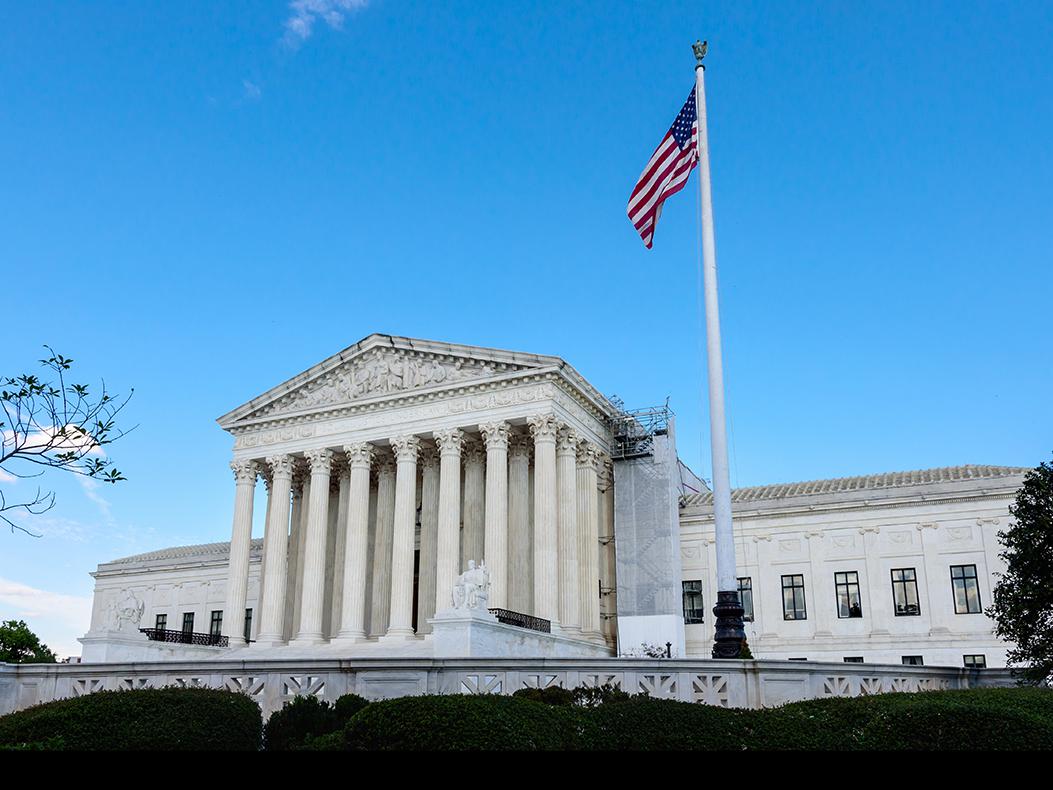
Topping headlines last week was a ruling by the U.S. Supreme Court that struck down the Trump Administration's country-by-country tariffs issued under the International Emergency Economic Powers Act of 1977 (IEEPA).
The Supreme Court's 6-3 ruling upholds an October U.S. Court of Appeals ruling that IEEPA tariffs, which range from 10% to 50%, are unlawful and exceed the authority of the statute.
In response to the Supreme Court's invalidation of IEEPA tariffs, President Donald Trump issued a temporary 15% tariff on imported goods.
- However, items that are subject to Sec. 232 tariffs, including automotive parts and steel- and aluminum-derivative items, are not subject to the 15% tariff (more on this below) nor are they impacted by this legal decision.
SEMA will continue to advocate for a level playing field for its members, including helping companies looking to re-domesticate their supply chains. SEMA, in a previous letter to the Trump Administration, urged the use of incentives that support American manufacturers as they transition their capabilities, including tariff exemptions for things like molds, tooling and machinery brought back to the United States, as well as tax incentives to offset the associated costs.
Here's what you need to know about this latest court development, and its broader implications on the American trade-and-export landscape.
Invalidating IEEPA tariffs does not impact tariffs imposed under Section 232 and 301
- The United States has imposed Section 232 tariffs on automobiles, auto parts, steel/aluminum/copper (including derivative items that contain these metals), semiconductors, timber/lumber and medium and heavy-duty trucks and their parts to safeguard industries vital to national defense. Sec. 232 tariffs are authorized by the Trade Expansion Act of 1962, a statute designed to protect United States national security by restricting imports of products deemed to threaten it.
- The United States has imposed Section 301 tariffs on imports from China (ranging from 7.5% to 25%) and Nicaragua (10%). Sec. 301 tariffs are designed to address unfair trade practices by other countries, such as intellectual property theft or trade imbalances.
- IEEPA tariffs include the "fentanyl" tariffs imposed on imports from China, Mexico, and Canada to address the opioid crisis, along with "reciprocal" tariffs that have been applied to goods from various countries in response to economic threats or actions harmful to U.S. interests.
New Sec. 122 Tariffs and Sec. 301 Investigations
While the ruling is welcome news to businesses that import goods and components subject to country-by-country tariffs issued under IEEPA, which ended on February 24, President Trump announced that he would implement a 15% global tariff under Section 122 of the Trade Act of 1974.
- Automobiles and auto parts that are covered by Sec. 232 tariffs are exempt from the new Sec. 122 tariffs, which took effect on February 24 and can last a maximum of 150 days (July 24 expiration date) unless Congress affirmatively votes to extend the tariffs. The new tariffs also do not apply to imports of steel, aluminum, copper and imports from Canada and Mexico that comply with USMCA.
- The president's executive order announcing Sec. 122 tariffs provides a limited exemption for goods loaded on a vessel in the final mode of transit prior to 12:01 am EST on February 24. To qualify, goods must enter into the United States before February 28.
President Trump also announced the initiation of new Section 301 investigations into unfair trade practices (countries that would be subject to the new investigations have not been named).
- Tariff authorities like Section 301, Section 232 (national security), and Section 201 require agency investigations, public comment periods, and agency reports to the President. These processes are not immediate.
IEEPA Tariff Repayment
The Supreme Court ruling does not provide a direct pathway for the U.S. government to repay businesses for IEEPA tariffs previously paid. The court ruled that tariff challenges can only be brought in the Court of International Trade, which will be responsible for deciding whether the U.S. government must repay businesses for tariffs collected under IEEPA.
Impact on Other Trade Deals
In the past year, the Administration has negotiated trade framework deals with 12 countries, including the European Union, the United Kingdom and Japan, and trade agreements with seven countries that relied in part on the IEEPA authority. SCOTUS's ruling on IEEPA generates uncertainty regarding those trade deals and framework agreements, including the agreed-upon tariff rates.
For additional information, contact Eric Snyder, SEMA's senior director of federal government affairs, at erics@sema.org.
Image courtesy of Shutterstock | Yaya Ernst